


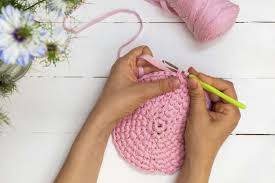
Crochet for Beginners: Basic Tools and Initial Stitches (Chain, Single Crochet, Double Crochet).
The Architecture of Fiber: A Comprehensive Analysis of Crochet Mechanics for Beginners
Section 1: The Engineer’s Toolkit: Hooks, Yarn, and the Evolution of the Craft
To understand crochet is to understand the tactile relationship between a rigid tool and a pliable fiber. The craft, which likely solidified into its modern form in Europe during the 19th century, relies on a deceptively simple instrument: the crochet hook. While early artisans utilized hooks carved from bone, wood, or ivory, the Industrial Revolution democratized the craft by mass-producing steel hooks, allowing for the intricate Irish lace that saved families from famine. Today, the modern crocheter faces a sophisticated array of materials, from aluminum—favored for its smooth "glide" which reduces friction—to ergonomic handles wrapped in silicone, designed to mitigate repetitive strain injury.
The hook’s size, measured in millimeters, refers specifically to the diameter of the shaft (the area between the throat and the handle), not the hook's head. [1] This measurement is critical because it dictates the size of the yarn loops. A mismatch here is catastrophic to the fabric's integrity; a small hook with bulky yarn creates a stiff, board-like textile, while a large hook with fine thread produces a loose, unstable mesh.
Yarn selection is equally technical. The Craft Yarn Council standardizes yarn into weights ranging from 0 (Lace) to 7 (Jumbo). For a beginner, the "sweet spot" is almost universally agreed to be Weight 4 (Worsted or Aran), typically paired with a 5.0mm (H-8) hook. This combination offers enough thickness to make stitch anatomy visible to the naked eye without being so bulky that it becomes unwieldy. Furthermore, fiber content dictates performance. Wool has memory and elasticity, forgiving uneven tension, whereas cotton is inelastic and unforgiving, revealing every inconsistency in a beginner’s hand.
Section 2: Biomechanics of the Grip: Knife vs. Pencil Methods
The interface between the human hand and the crochet hook is defined by the grip, a biomechanical choice that influences speed, tension, and long-term joint health. There are two dominant schools of thought: the Knife Grip (overhand) and the Pencil Grip (underhand). The Knife Grip involves holding the hook handle in the palm, similar to a steak knife. This method engages the larger muscle groups of the forearm and shoulder, offering leverage and power. It is often the preferred method for those working with heavy, thick yarns or for crocheters suffering from arthritis, as it minimizes stress on the delicate joints of the fingers.
Conversely, the Pencil Grip mimics the hold used for writing, resting the hook between the thumb and index finger while the shaft rests against the middle finger. This technique relies heavily on fine motor manipulation using the fingertips. Proponents of the Pencil Grip often achieve higher speeds and greater precision with fine threads, as the range of motion is smaller and more fluid. However, it places significant strain on the wrist and fingers if tension is not managed correctly.
Regardless of the chosen grip, the non-dominant hand plays an equally vital role as the "tension regulator." The yarn must flow through the fingers of the non-dominant hand at a consistent rate. If the grip is too tight, the resulting fabric will pucker; too loose, and the structure collapses. Mastering this bilateral coordination—one hand driving the tool, the other feeding the material—is the primary motor skill required to transition from novice to artisan.
Section 3: The Foundation Chain: The Spine of the Project
Every crochet project begins with the foundation chain, a series of interlocking loops that serves as the spine upon which the entire fabric is constructed. Unlike knitting, where a foundation row is cast onto a needle, the crochet chain is suspended in air until the first row is worked into it. This structural vulnerability makes the chain the most common point of failure for beginners. A chain that is too tight will act like a corset, cinching the bottom of the fabric and causing the work to bow into a rainbow shape. Conversely, a loose chain leaves unsightly gaps at the hem.
Anatomically, the chain stitch resembles a sideways "V" or a braid. It consists of three distinct parts: the top loop, the bottom loop, and the "back bump" (or spine) running along the reverse side. [2] A sophisticated understanding of these components allows for different edge finishes. Working into the "back bump" rather than the standard top loop creates a finished edge that mirrors the top of the final row, providing a professional, symmetrical border often seen in high-end garments.
The mechanics of the chain are simple yet fundamental: yarn over (wrapping the yarn from back to front) and pull through. This "yarn over" is the heartbeat of crochet. It is the action that loads the hook with potential energy, which is then converted into a stitch. The chain teaches the crafter the rhythm of this movement and the necessity of maintaining consistent loop size, a skill that translates directly to every subsequent stitch. [2]
Section 4: The Single Crochet: Structural Density and Engineering
The Single Crochet (abbreviated as SC in US terms) is the brick-and-mortar of the craft. It is the shortest and densest of the basic stitches, creating a tight, stiff fabric with very little drape. This structural rigidity makes single crochet the exclusive stitch of choice for amigurumi (the Japanese art of knitting or crocheting small, stuffed yarn creatures). [3] Because the stitches stack closely together with minimal gaps, they successfully contain stuffing without allowing the polyester fiberfill to leak out, a crucial requirement for toy safety and aesthetics.
To execute a single crochet, the hook enters the fabric, retrieves a loop (two loops on hook), and then the yarn is pulled through both loops simultaneously. [4] This action locks the stitch in place. Unlike the double crochet, the single crochet lacks a "stem," meaning the stitch is composed almost entirely of the interlocking top loops. This results in a fabric that grows slowly but possesses immense tensile strength.
From a mathematical perspective, the single crochet is a square unit. This geometric reliability makes it ideal for "graphghans"—blankets where images are created pixel-by-pixel using different colored yarns. However, the density of the stitch consumes more yarn per inch of vertical height compared to taller stitches. It is a labor-intensive stitch, requiring more hand movements to cover the same surface area as a double crochet, but the reward is a durable, wind-resistant textile suitable for bags, baskets, and winter hats.
Section 5: The Double Crochet: Fluidity, Drape, and Efficiency
If the single crochet is a brick, the Double Crochet (DC) is a column. It stands approximately twice the height of a single crochet and introduces a new mechanical step: the initial yarn-over before entering the fabric. This pre-loading of the yarn creates a "stem" or "post" that gives the stitch its height and flexibility. The process involves pulling through two loops, then pulling through the remaining two loops. [2][5] This two-step resolution creates a hinge-like structure in the middle of the stitch, allowing the fabric to fold and drape elegantly.
This flexibility makes the double crochet the standard for wearable garments like sweaters, shawls, and afghans. It breathes. [6] The gaps between the posts allow for airflow and movement, preventing the stiff, bulletproof feel of a single crochet garment. Furthermore, the double crochet is a stitch of efficiency. According to textile experiments, while single crochet consumes more yarn to create a dense fabric, double crochet covers surface area much faster. A blanket made in double crochet will be completed in roughly half the time of one made in single crochet, making it the preferred choice for large-scale commercial or charity projects.
However, this height comes with a trade-off in stability. [5] The taller the stitch, the more open the fabric. In complex patterns, the double crochet is often used in clusters (like the Granny Square) to mitigate this openness while retaining the speed of production. Understanding the difference between the rigid single crochet and the fluid double crochet allows the crafter to act as an engineer, selecting the correct structural component for the load-bearing or aesthetic needs of the project.