



What is Dietary Fiber and What are Its Amazing Health Benefits?
Introduction: Redefining "Roughage"
For decades, dietary fiber was dismissed by the medical community as mere "roughage"—an inert bulking agent useful only for regularity. This reductionist view has been shattered by modern nutritional science. We now understand that fiber is not merely a passive passenger in the digestive tract but a dynamic metabolic regulator. It is a complex carbohydrate found exclusively in plant cell walls that resists enzymatic digestion in the small intestine. However, its resistance to digestion is precisely what unlocks its physiological power. By surviving the journey to the colon, fiber initiates a cascade of biological processes that protect against chronic disease, regulate metabolism, and maintain the delicate symbiosis between humans and their microbiome. It is not just about digestion; it is about survival.
The Dual Mechanics: Viscosity and Fermentation
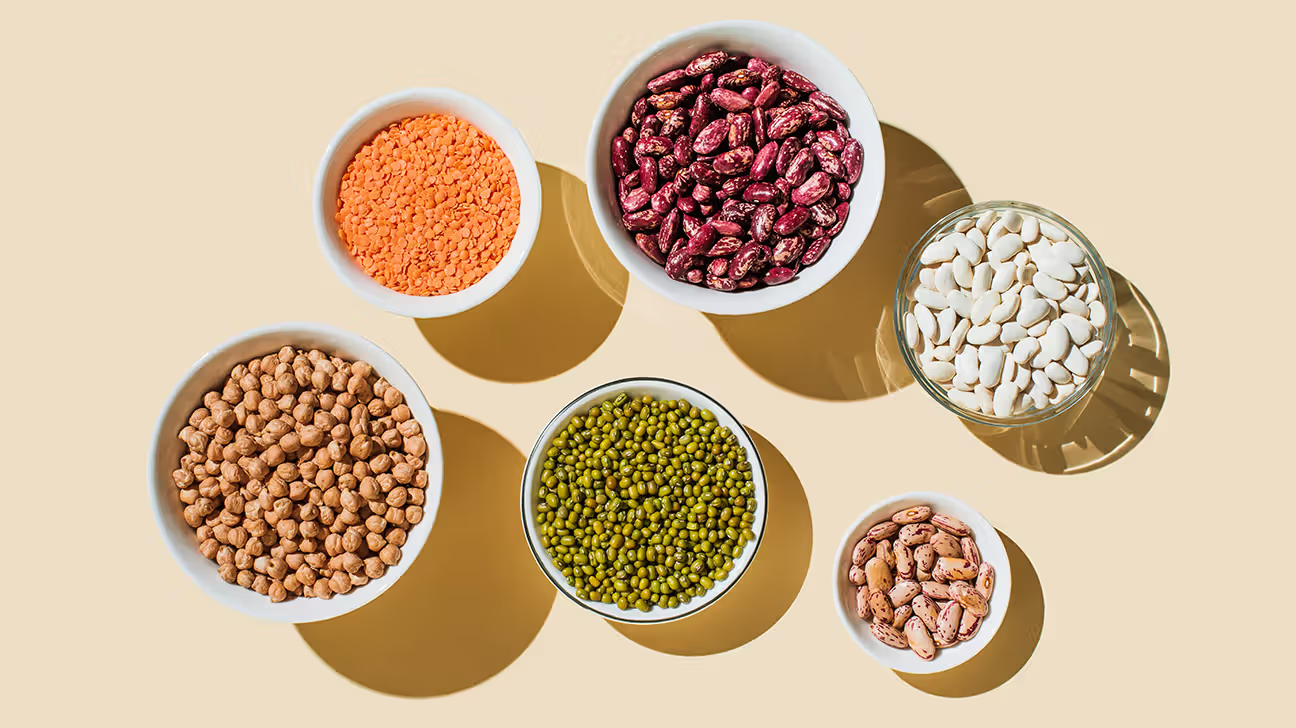
To understand fiber’s efficacy, one must distinguish between its two primary mechanical behaviors: solubility and insolubility. [1][2] Soluble fiber, found abundantly in oats, legumes, and citrus fruits, possesses a unique capacity for viscosity. Upon contact with water, it dissolves into a thick, gel-like matrix. [2] This gelatinous substance is not trivial; it physically traps macronutrients, slowing the rate at which the stomach empties and modulating the speed at which sugars enter the bloodstream. Conversely, insoluble fiber—dominant in wheat bran, nuts, and cauliflower—acts as a structural abrasive. It does not dissolve but rather absorbs water and swells, adding significant bulk to stool. This "sweeping" mechanism stimulates peristalsis, the rhythmic contraction of the intestines, ensuring that waste products and potential toxins are expedited out of the body before they can cause cellular damage.
The Microbiome Factory: Short-Chain Fatty Acids
The most profound scientific breakthrough regarding fiber lies in its relationship with the gut microbiome. The human genome does not code for enzymes capable of breaking down fiber; however, the trillions of bacteria residing in the colon do. When fermentable fibers reach the large intestine, they become the primary fuel source for beneficial bacteria species like Bifidobacteria and Lactobacilli. Through anaerobic fermentation, these microbes convert fiber into Short-Chain Fatty Acids (SCFAs), specifically acetate, propionate, and butyrate.
Butyrate, in particular, is a biological miracle. It serves as the primary energy source for colonocytes (colon cells), providing up to 70% of their energy needs. Research indicates that butyrate functions as a potent anti-inflammatory agent, suppressing the production of pro-inflammatory cytokines and strengthening the gut barrier. A strong gut barrier is critical because it prevents "metabolic endotoxemia"—a condition where bacterial toxins leak into the bloodstream, triggering systemic inflammation linked to autoimmune diseases and obesity.
Metabolic Mastery: The Glycemic Brake
In an era where Type 2 diabetes has reached epidemic proportions, fiber acts as a critical metabolic brake. The mechanism is elegant in its simplicity but powerful in its effect. When soluble fiber forms a viscous gel in the small intestine, it coats the lining of the gut and encapsulates food particles. This physical barrier inhibits the activity of digestive enzymes like amylase, which breaks down starch into glucose. Consequently, glucose is released into the bloodstream as a slow, steady trickle rather than a dangerous flood.
This modulation prevents the sharp spikes in blood sugar and insulin that drive insulin resistance. Furthermore, the fermentation of fiber triggers the release of satiety hormones, such as Glucagon-Like Peptide-1 (GLP-1) and Peptide YY (PYY). [3][4] These hormones travel to the hypothalamus in the brain to signal fullness, effectively curbing appetite. Clinical trials have consistently shown that high-fiber diets are associated with lower body weight and improved insulin sensitivity, making fiber a non-negotiable tool in the management of metabolic syndrome.
Cardiovascular Defense: The Bile Acid Trap
Heart disease remains the leading cause of death globally, yet fiber offers a natural pharmaceutical-grade intervention. The liver uses cholesterol to manufacture bile acids, which are essential for digesting fats. In a low-fiber diet, these bile acids are released into the intestine, do their job, and are then reabsorbed back into the bloodstream to be recycled. Soluble fiber disrupts this cycle.
By binding to bile acids in the small intestine, fiber prevents their reabsorption, forcing them to be excreted in the stool. [5] To replace the lost bile acids, the liver must pull LDL ("bad") cholesterol from the bloodstream to synthesize more. This process, known as the "bile acid sink," directly lowers serum cholesterol levels. A meta-analysis published in the American Journal of Clinical Nutrition suggests that significant fiber intake can reduce the risk of coronary heart disease by up to 40%, a statistic that rivals the efficacy of some statin medications without the side effects.
The Oncological Shield: Cancer Prevention
The link between fiber and the prevention of colorectal cancer is one of the most robust findings in nutritional epidemiology. The protection is twofold. [6] First, the bulking action of insoluble fiber dilutes fecal carcinogens and accelerates their transit time, minimizing the duration of contact between toxins and the colonic mucosa. [7] Second, and perhaps more importantly, the SCFA butyrate exhibits "histone deacetylase inhibition" activity. In plain English, this means butyrate can silence genes that promote cancer cell proliferation and trigger apoptosis (programmed cell death) in mutated cells. It effectively creates an environment in the colon that is hostile to tumor growth.
The Gut-Brain Axis: Mental Health Implications
Emerging research has unveiled a fascinating connection between fiber and mental health, mediated by the "gut-brain axis." [8] The gut produces approximately 90% of the body's serotonin, a neurotransmitter that regulates mood. A fiber-deprived gut leads to a reduction in microbial diversity (dysbiosis), which has been linked to anxiety and depression. By feeding the microbiome, fiber ensures the production of neurotransmitter precursors and anti-inflammatory compounds that travel the vagus nerve to the brain. Thus, a bowl of oatmeal is not just heart-healthy; it is arguably brain food, supporting emotional resilience through biological pathways we are only just beginning to map.
Conclusion
Dietary fiber is far more than a digestive aid; it is a fundamental pillar of human physiology. [9] From regulating blood glucose and lowering cholesterol to feeding the microbiome and protecting against cancer, its influence extends to every system in the body. The modern Western diet, often stripped of this vital nutrient, has left millions metabolically vulnerable. Reintegrating whole plant foods—legumes, grains, fruits, and vegetables—is not merely a dietary choice but a necessary medical intervention.